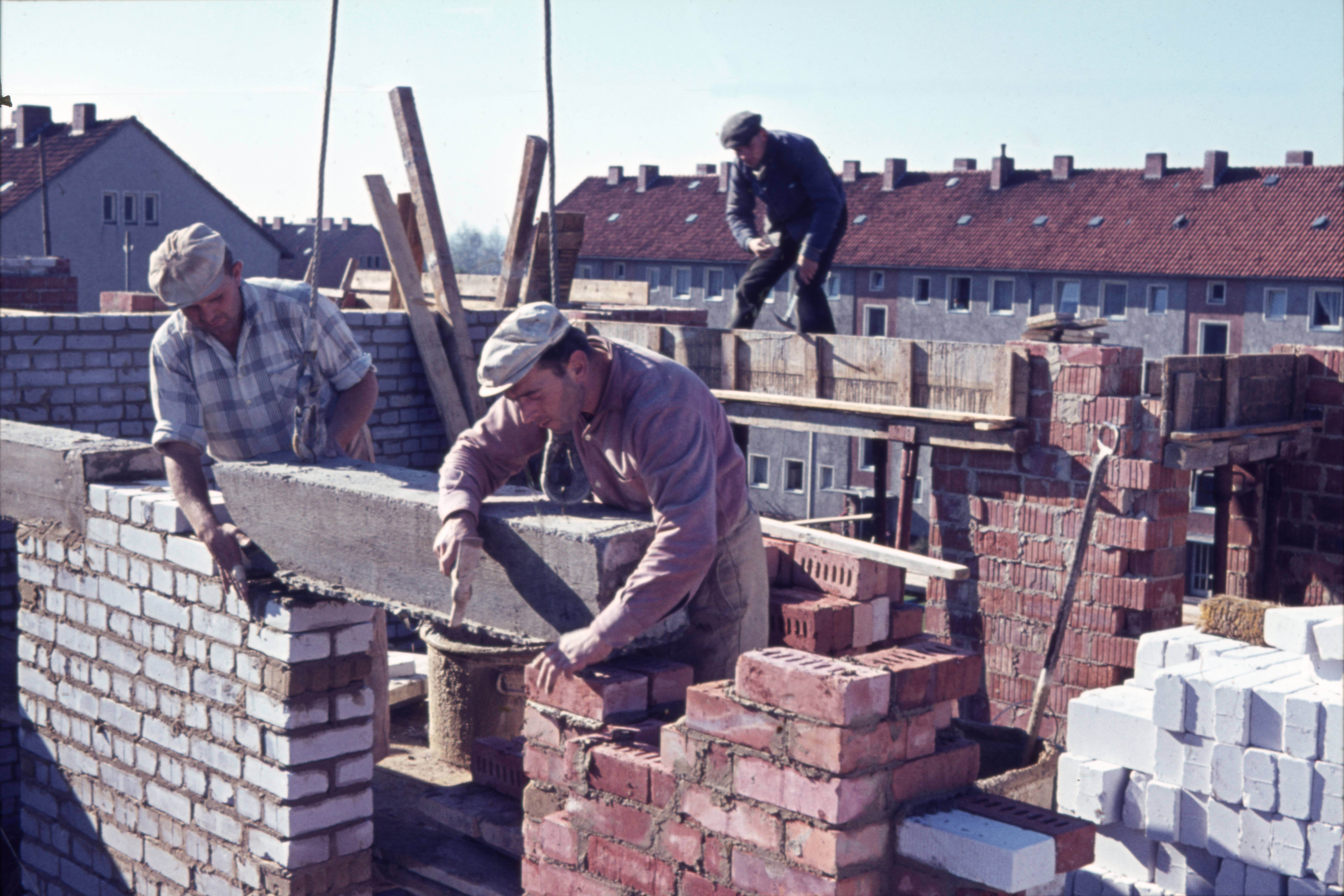
The building and construction sector accounts for 37 percent of global greenhouse gas emissions. Cement production alone accounts for eight percent of that. Within the European Union, the construction industry generates more than a third of all waste.
Christian Glock, professor in the Department of Civil Engineering, says:
“To achieve future climate neutrality and reduce resource consumption, changes must be made in the construction industry."
Glock is the spokesperson for the research initiative “Construction of the Future – Climate-Friendly and Resource-Efficient.”
This initiative, funded by the state of Rhineland-Palatinate, connects researchers from various disciplines and initiates collaborative research projects. At RPTU, a dedicated research area brings together expertise in this field.
Not reinventing construction – but improving it
“To this day, traditional and artisanal processes still dominate construction,” explains Glock. “There are many levers we can pull to improve processes, for example, to reduce material consumption.”
The initiative does not aim to reinvent construction, but to make it better: more resource-efficient, more efficient, and more precise. To this end, researchers are developing optimized components and materials, as well as concepts for greater automation and digitalization.
A key component of “Construction of the Future” is the globally unique research facility “Gulliver.” The giant CT scanner at the RPTU in Kaiserslautern visualizes damage and weak points in building components. Using the facility, researchers investigate under realistic conditions where the critical issues for safe and sustainable construction lie.
Robots on the construction site
Another highlight is the HumanTech project1, which was completed in 2025 and focused on how robotics and AI can support work on real construction sites.
“Our goal was to enable robots to reliably determine their position and work with precision,” explains Glock. The challenge: Unlike in industrial manufacturing, the environment on a construction site is highly dynamic and constantly changing. In Glock’s words: “Robotics on the construction site is the Champions League for developers.”
The Kaiserslautern project partners focused on the interface between a digital building model and the actual construction site. “We captured real construction environments via 3D scanning and linked them to digital building models,” explains the professor. The crucial step was ensuring the closest possible match between real-world conditions and the digital twin. Only then can robots navigate safely. The collaboration between AI experts and the Department of Civil Engineering made it possible to apply AI methodologies in real construction environments.
Assistant to the bricklayer
In HumanTech, robots were tested, among other things, as assistance systems for bricklayers, for example to pass bricks. “While an industrial robot performs the same movement a thousand times, the system on the construction site must first recognize where the pallet is, how the bricks are positioned, and where the person is,” Glock explains. The team also tested other complex tasks, such as applying a silicone sealant. “The robot must use image and 3D data to determine where to apply the sealant and how thick it should be.” As a result, the project provided practical foundations for further developments.
Next step: ShieldBot
The follow-up project ShieldBot, also funded by Horizon Europe, focuses on the next generation of construction robots. The core idea of the three-year project, which has been running since November 2025, is a robotic system for interior finishing: a mobile robot capable of holding and securing a drywall panel while simultaneously injecting insulation. In parallel, drones are intended to automatically inspect building envelopes. ShieldBot builds directly on the insights gained at HumanTech regarding sensor technology and navigation in complex construction environments.
Lego logic instead of disposal
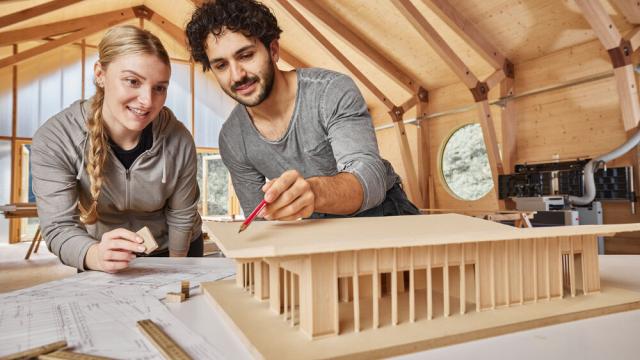
In the “Zirk-H(R)BV-Decke” project, researchers developed a wood-concrete composite ceiling that can be dismantled and reused without damage even after decades. The approach follows a “Lego logic” rather than traditional recycling, explains the professor. “Today’s concrete recycling is like taking an intact Lego brick, grinding it up, and making a new Lego brick out of it.”
True circular economy
The project addresses a problem with the wood-concrete composite slabs commonly used today. “These are popular because they make good use of the advantages of both materials. But they are not reversible because they are firmly bonded,” says Glock.
The system developed as part of the project, on the other hand, works with mechanically joined elements. “If the building is to be dismantled after 50 years, the ceiling structure can simply be lifted apart” – a practical contribution to a true circular economy. The project, funded by the Federal Ministry of Research, Technology, and Space, was successfully completed in 2025. A follow-up project for further development is already underway.
Dialogue with industry and politics
The initiative explicitly sees itself as a bridge between research and practice. At a “Construction of the Future” think tank at the Mainz State Parliament, representatives from business, politics, and academia discussed barriers to innovation and potential solutions.
Glock emphasizes that the exchange should work in both directions: “We want to receive and share impetus. Research must not only develop solutions, but also reflect on where we could actually be doing more today and are instead facing an implementation problem.”
Federal Minister of Construction praises initiative
“Building of the Future” 2025 also gained visibility through a publication in the renowned VDI journal Bauingenieur. Thirteen authors from the initiative presented their work in the journal.
“We were particularly pleased that Verena Hubertz, the Federal Minister for Housing, Urban Development, and Construction, explicitly highlighted the initiative as an example of the ‘right spirit’ in an opinion piece in the same issue,” says Christian Glock, who points out that the publication is intentionally freely accessible. “We don’t want to leave anything in a drawer.”
About the research initiative “Construction of the Future – Climate-Friendly and Resource-Efficient”
The initiative brings together twenty professors from the RPTU as well as other research institutes in Kaiserslautern. Among others, the German Research Center for Artificial Intelligence GmbH (DFKI) is on board. As part of the initiative, teams comprising researchers from the fields of architecture, civil engineering, mechanical engineering, electrical engineering, computer science, artificial intelligence, robotics, materials science, and mathematics are applying for funding projects.
1 On the “Construction of the Future” side, the HumanTech project involved scientists from the special area “Concrete Structures and Structural Design” as well as the Robotics Research Lab and the German Research Center for Artificial Intelligence DFKI. In total, the program – funded by the EU Horizon program – brought together 22 partners from science and industry across several European countries.
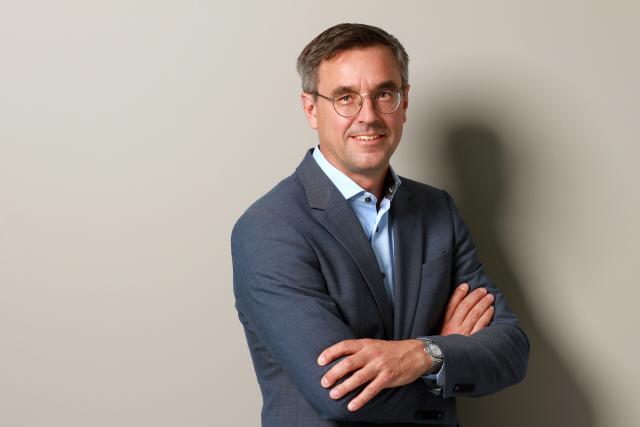
© RPTU, Thomas Koziel
Prof. Dr.
Christian
Glock
Professor for Concrete and Masonry Structures
"Construction is the foundation of civilization, with great environmental impact. Therefore, construction must become more sustainable and automated."
Christian Glock has been a university professor at RPTU since 2017, with research focuses on structural, resource-efficient and low-carbon construction, as well as digitalization and automation. He is a member of numerous committees, spokesperson for the editors of “Bauingenieur”, and the research initiative “Construction of the Future”. From 1999 to 2017, he worked for Bilfinger Berger Group, most recently as managing director of Bilfinger Hochbau GmbH (now Implenia Hochbau GmbH).
FORSCHERPROFIL AUF RPTU.DE
Want to learn more about this topic?
Here are some recommendations for further reading (German only):
Bayer, D.; Berns, K.; Carrigan, S.; Glock, S.; Kaufmann, F.; Körkemeyer, K.; Kornadt, O.; Kurz, W.; Liu, S.; Pahn, M.; Sadegh-Azar, H.; Stricker, D.; Thiele, C.: Bauen der Zukunft – eine interdisziplinäre Forschungsinitiative. Bauingenieur Jahrgang 100 (2025), Heft 10, Düsseldorf: VDI Fachmedien, 2025. S. 271-280
Hegger, J.; Glock, C.; Curbach, M.; Fischer, O.; Haist, M.; Leutbecher, T.; Mark, P.; Scheerer, S.; Forman, P.; Sanio, D.; Müller, R.; Sinning, A.; Schmidt C.: Innovativer Betonbau – Tradition und Zukunft. Bauingenieur Jahrgang 100 (2025), Heft 7-8, Düsseldorf: VDI Fachmedien, 2025. S. 181-195
Glock, C.; Heckmann, M.; Hondl, T.; Kaufmann, F.; Schellen, M.; Sefrin, R.: Massivbau in Zeiten von Klimawandel und Ressourcenverknappung – Herausforderungen und Lösungsansätze. Bauingenieur Jahrgang 97 (2022), Heft 1, Düsseldorf: VDI Fachmedien, 2022. S.1-12