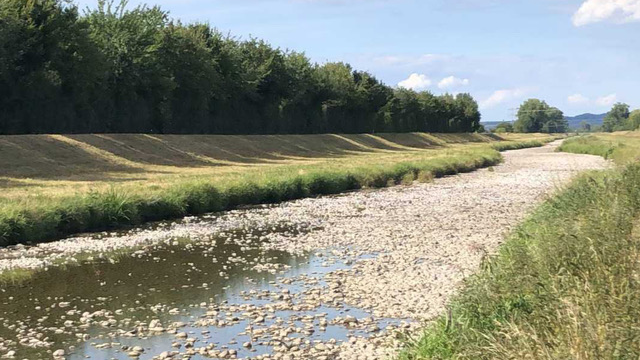
The wind swirls dust across the fields. There is lots of yellow and brown: withered rows of corn, wilted leaves, and rock-hard, cracked soil. The effects of drought on agriculture are clearly visible on this late-summer day.
Too much heat and too little rain have also taken a toll on the two hectares that Pascal Baron farms near the village Rohrbach in the Southern Palatinate. At some point this summer, he had to give up on his radish, carrot, cauliflower, and broccoli crops. He harvested only about half as many tomatoes as usual. Even the water from his well was no longer enough.
Chicken farming and a colorful mix of plants
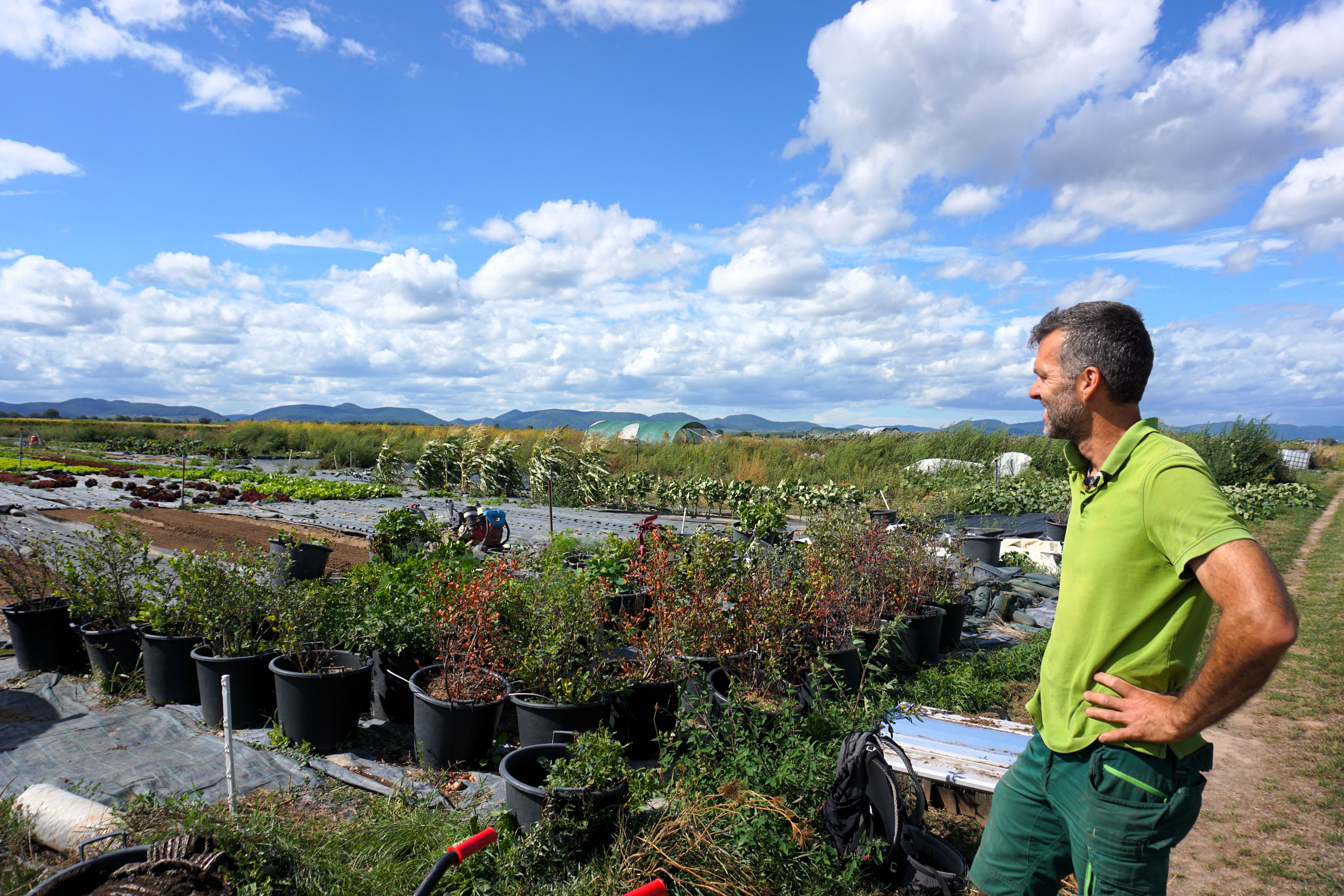
Baron looks out over his fields, where heads of lettuce stand in long rows, potatoes grow alongside them, and a strip of corn runs between them. Tomatoes and eggplants grow under plastic tunnels. In a fenced-off area, a large flock of brown chickens peck and scratch vigorously.
"It’s been a difficult year," says the farmer. Still, he has been relatively fortunate.
He lifts the black mulch fabric covering part of the beds. The soil beneath is dark. The fabric significantly reduces evaporation, helping him a great deal with irrigation.
Soil like a sponge
What Baron actually wants to show lies a bit deeper. He digs into the soil with his hand. It gives way easily after 30 to 40 centimeters. "In areas where we've been farming for a few years, the soil can store much more water," says Baron. He describes a heavy downpour. Some of the surrounding fields were underwater for two or three days. On the other hand, he was able to get back to work on his plots shortly after the downpour. "My soil is like a sponge."
From an IT job to the fields
Baron’s land, with its diverse crops, stands out in a region dominated by monocultures of beets and corn. Just a few years ago, the 53-year-old worked at a desk in the IT industry. During a career break, he came across the topic of regenerative agriculture. "How can we eat healthy? What can be done about climate change, and how can CO₂ becaptured and stored? These questions drove me,” he explains.
Baron likes to get things done. On a whim, he bought two hectares of land in his hometown. He started with ten chickens and a few garden beds. "I thought: Just give it a try." That was about seven years ago. Today, the farm feeds his family. Under the "Weidevogel" label, Baron sells his vegetables, as well as eggs and chicken meat. The concept has been a success. People line up for his products at weekly markets.
The natural ecosystem as a model
Julius Reiff also took notice of Baron’s project. For his dissertation, the environmental scientist researched the impact of permaculture on soil and biodiversity. Weidevogel was one of several farms whose land he studied.
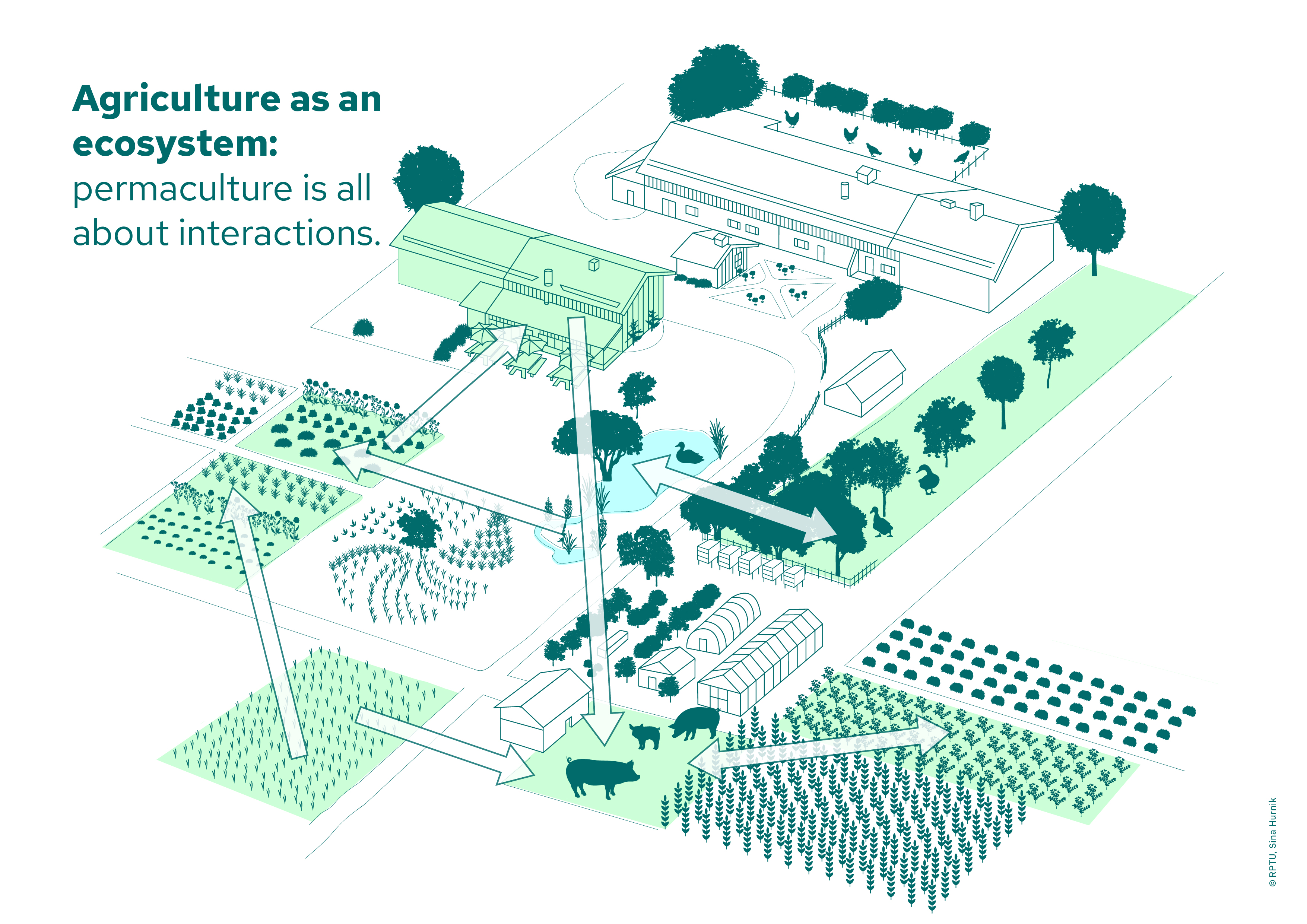
“At its core, permaculture is about creating agricultural ecosystems modeled after natural ones – with their diversity, interactions, complexity, and resilience,” Reiff explains. In this type of agriculture, various elements work together: plants cover the soil, animals provide manure, and plant residues supply additional nutrients. As much as possible remains in the cycle, just as in an intact natural environment. The idea is not to produce at the expense of natural resources but rather to preserve natural foundations.
Significant differences were observed in the permaculture plots compared to control plots
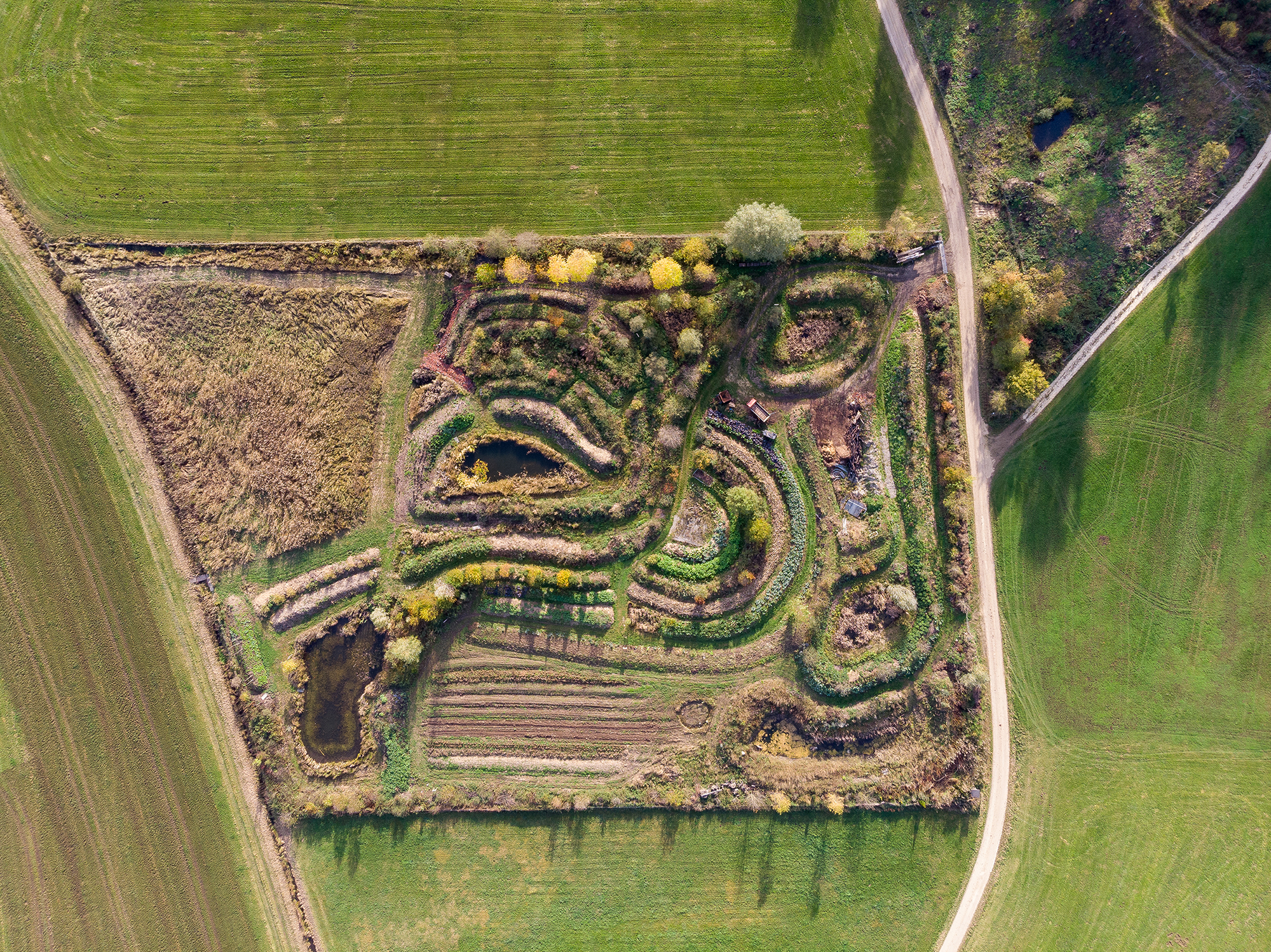
For their study, Reiff and other researchers from RPTU and BOKU University in Vienna closely examined nine permaculture sites in Germany and Luxembourg. They collected soil samples, measured carbon and nutrient levels, and counted earthworms, plants, and birds. The team compared the results with neighboring areas that were each managed according to local practices.
"On the permaculture sites, soil carbon stocks were, on average, 27 percent higher than on the comparison sites," Reiff reports. "The soil was 20 percent less dense. There was a significantly deeper, humus-rich topsoil layer, as well as more microorganisms. Biodiversity was also higher. The researchers found significantly more plant, earthworm, and bird species than in the control plots. This also means more habitat for animals that eat pests. This natural pest control may be one reason why the farms can manage without synthetic pesticides."
Typical of permaculture: Fertilizing with compost
The environmental scientist specifically cites the carbon content in the soil as an important factor. Carbon is found in organic material, such as plant residues or manure. Earthworms and microorganisms break down this material, contributing to the formation of humus and the nutrient cycle. Humus stores nutrients and water like a sponge and provides a habitat for many soil organisms.
"Therefore, an important characteristic of permaculture systems is that fertilization is not primarily carried out using individual nutrients, but rather with organic material rich in carbon, such as plant residues, animal manure, or compost," says Reiff.
Manure makes the difference
Here’s how Baron does it: He mixes chicken manure with flax straw and lets the mixture compost for several months. Then, he spreads the compost over his vegetable beds. "If I were just raising animals, I’d have to get rid of the manure. Here, it provides nutrients for my vegetables," creating a cycle. The roots of harvested plants remain in the bed. At the same time, Baron tries to disturb and compact the soil as little as possible.
He hasn’t needed additional fertilizer in a long time. "The chicken manure also improves the quality of the produce. For example, it improves the quality of lettuce. Its appearance, firmness, taste, and shelf life have all improved significantly. Customers agree.” he reports.
"The higher soil nutrient levels we’ve measured suggest that the plants' nutrient levels are higher as well," adds Julius Reiff. Therefore, the crops produced could likely be healthier.
Niche topic or a widespread alternative?
“Permaculture seems to be a much more sustainable alternative to industrial agriculture,” Reiff says. But is it feasible on a large scale? Reiff’s research team compared the yields from the permaculture plots they studied with the average yields in German agriculture. They found no significant difference in land productivity. "This suggests that permaculture's land productivity is comparable to mainstream industrial agriculture's." Therefore, from our perspective, there is no fundamental reason not to practice permaculture on a larger scale. There are already successful examples in other countries." With species disappearing and droughts becoming more frequent, Reiff sees great potential in permaculture for sustainable agriculture.
Permaculture put to the test
RPTU environmental scientist Julius Reiff and other researchers conducted a scientific study of permaculture. Nine sites showed higher soil carbon content, less soil compaction, and greater biodiversity compared to neighboring agricultural land. A second study of eleven farms revealed land productivity comparable to that of German agriculture as a whole and to organic farming. Reiff’s conclusion: Permaculture can combine ecological benefits with productive agriculture.
In his view, this requires adapting farming practices to different locations and farms, which is entirely in line with permaculture's fundamental principle of context-specific planning. "We also need suitable concepts for training and financing, as well as large-scale model projects."
A farm must function both ecologically and economically
"I could sell significantly more vegetables than I currently produce," says Baron. For him, the limitations lie primarily in the current local infrastructure, such as water and electricity access, as well as the absence of a common room and restrooms. "Of course, I also need people who know what to plant, when to plant it, and when to harvest it."
"This is a business, not a private garden," Baron emphasizes. He actually prefers to refer to his project as regenerative agriculture rather than permaculture. "I can only make a difference if it's worthwhile and works in day-to-day operations. Ultimately, the vegetables must be grown, harvested, sorted, transported, and sold efficiently.” In his view, this isn’t possible without compromises. "But if, at the end of the day, it works – if we're doing good for the environment, producing food that people enjoy, and making money from it – then it's a good thing."