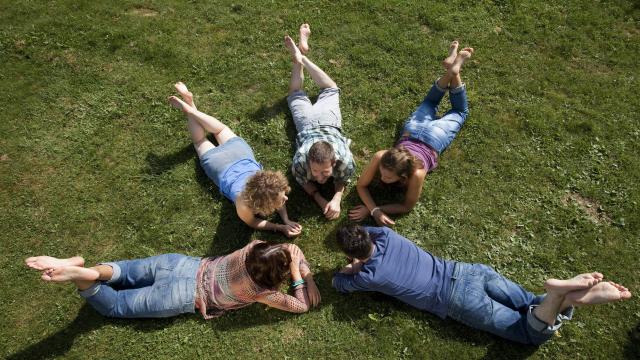
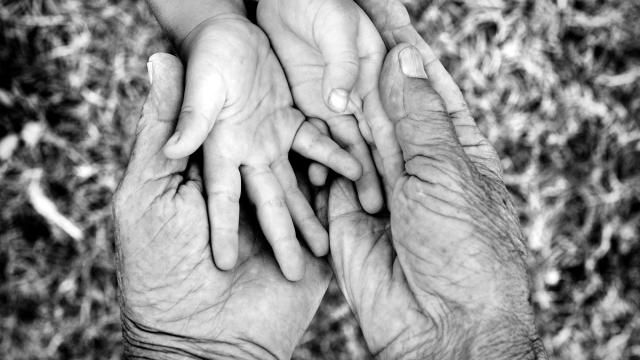
"For me, social exclusion is the subtle cousin of bullying," explains Professor Selma Rudert. While bullying requires active behavior with the intention of harming someone, exclusion is more passive. "I don't take action; rather, I refrain from doing something – namely, paying attention to a person or including them in a group," says Rudert. Consequently, the person doing the excluding can often not be held directly responsible for their behavior because they can easily dismiss it as an accident. Exclusionary behavior is often accidental, but it can also be intentional. “The line between bullying and exclusion is blurred,” says Rudert.
There are many reasons for exclusion
People exclude others for many reasons, and some of these reasons have nothing to do with malicious intent. The effects of exclusion on those affected are equally complex. According to Rudert, to understand the issue fully, it is important to consider the perspective of those who observe exclusion but don't experience it themselves. Recognizing exclusion is not easy because direct rejection is rare. "A typical example of exclusion is when a colleague isn't invited to join the group for lunch," Rudert explains, "or when I don't include a colleague on the email distribution list."
Younger adults experience more exclusion than older adults.
Research rarely examines the causes of exclusion, although for Rudert, this is the central question. Usually, it is the consequences of exclusion that are investigated. For Rudert, however, the consequences and reasons are closely related. She therefore wants to use her research to understand the driving forces behind exclusion to better understand its consequences. "People are highly sensitive to experiences of exclusion," Rudert emphasizes. Research shows that even brief episodes can have serious negative effects on well-being. Rudert currently heads an Emmy Noether research group, funded by the German Research Foundation, that studies the reasons for situated exclusion decisions. "I have developed a model to explain how targeted exclusion decisions arise," says Rudert. Together with her team, she is empirically testing the predictions of the Situated Ostracism Model (SOM) and expanding it further.
Based on their data, Rudert and her team have classified several motives for exclusion.
For example, people exclude others to punish them and change their behavior. People may also exclude others to protect themselves or their group if the excluded person is perceived as a burden or threat. However, exclusion can also arise for reasons unrelated to the excluded person. Exclusion may be based on group rules and norms, or it may occur accidentally.
“The line between bullying and exclusion is blurred”
Selma Rudert
When a person is excluded to punish them, it is often done strategically. "Instead of confronting the person who annoyed me, I give them the cold shoulder," Rudert explains. This strategy is often used in everyday life. However, it is not effective if you want to change someone's behavior. First, the person must understand the exclusionary behavior, interpret it correctly, and accept it as a reason for change. "It may well be that the person I exclude because of their behavior will behave even worse as a result," says Rudert.
Certain situational conditions can also reinforce exclusion. For example, when work teams are under pressure to perform, they are more likely to exclude or not select someone perceived as not contributing to the team's progress. "The problem is that certain social groups are affected more frequently. For example, people with a migrant background or a different sexual orientation," says Rudert. Her studies show that, when considering diversity in teams, most people weigh both desirability and feasibility. Specifically, this means that when selecting another team's composition, diversity is appealing. However, when making the choice for my own team, I increasingly consider the effort that diversity can bring, such as having a non-native speaker on the team, and decide differently.
A catalyst for uncooperative behavior
In studies with researchers from Basel and the USA, Rudert investigated whether certain behaviors and personality traits increase the risk of exclusion. "People who behave in an uncooperative and unsociable manner, as well as those who act unreliably, are more likely to be excluded," Rudert summarizes. Participants were presented with descriptions of people with different personality traits or information about how the person behaved in previous tasks. Then, they had to decide whether to exclude the person from a future group activity.
Recognizing exclusion is not easy because direct rejection is rare.
In other studies, participants were asked how likely they would be to exclude the person. The studies showed that circumstance also plays an important role. Unfriendly people are particularly excluded in social situations. In contrast, in work contexts where performance is important, people who are less reliable or competent are more likely to be excluded.
Exclusion hurts
Why is the experience of exclusion so painful? "In our research, we assume that exclusion violates four fundamental human needs," explains Rudert. These needs include belonging to a group, having self-esteem and control, and having a "meaningful existence." In other words, a person longs to be noticed. "Unintentional exclusion, in particular, does not allow for that," Rudert emphasizes. Those who are excluded often assume that they have left no impression and that their existence has been forgotten. "A paradoxical research finding is that people often cope better with being openly rejected or aggressively approached than with being silently ignored and overlooked," says Rudert. At least then they would feel noticed as a person.
"A paradoxical research finding is that people often cope better with being openly rejected or aggressively approached than with being silently ignored and overlooked"
Selma Rudert
Methodologically, exclusion researchers rely on a combination of laboratory experiments and surveys to understand the phenomenon of social exclusion. A prominent three-phase model in exclusion research, the "Temporal Need Threat of Ostracism," is an important basis for examining the consequences. The reflexive phase occurs immediately after a person experiences exclusion and is usually characterized by an intense feeling of pain. The excluded person considers why the experience occurred and how they will respond. The resignation phase covers the longer period of chronic exclusion. "There is extensive research on the first two phases, which are investigated in laboratory experiments," says Rudert. However, there is still a great need for knowledge about the third phase, which can only be studied through surveys, as Rudert and her colleagues in Mannheim and Basel have done.
The experience of exclusion depends on age
This study yielded two key findings: younger adults experience more exclusion than older adults, and a higher degree of social exclusion makes it more likely that they will develop depression in the following years. "Our data show a correlation between experienced social exclusion and age," says Rudert. The data also suggest that this correlation may be related to reaching retirement age. "The workplace is a relatively common source of social exclusion, and people often cannot choose their colleagues," emphasizes the social psychologist. The working world is often characterized by stress factors such as time constraints, deadlines, and limited resources. Expecting people to work together while competing with each other for jobs or promotions creates a climate highly susceptible to exclusion.
A higher degree of social exclusion makes it more likely that they will develop depression in the following years.
Exclusion also affects well-being. The study shows a general correlation between exclusion and poorer mood and lower life satisfaction in people of all ages. According to the scientist, it is particularly concerning that people who report frequent exclusion are at a higher risk of developing depression a few years later. "Many of these relations probably work in both directions, so a vicious cycle can develop," Rudert estimates. Further research is needed to investigate these mechanisms in more detail, but based on current data and previous research, Rudert and her colleagues suspect that frequent exclusion reduces well-being and can lead to social withdrawal, as well as distrustful and hostile behavior toward others. In response, those affected may be excluded even more frequently.
Measures against exclusion can help
Even though exclusion often goes undetected because it flies under the radar compared to bullying, it has a major impact on individuals and society. Through her research, Rudert aims to improve our understanding of how and why such behavior occurs and how to prevent it from happening frequently because we know the negative consequences. Therefore, it is important that politicians, companies, and schools become aware of this problem and create environments that are less conducive to exclusion. "This includes creating a culture of conflict in which problems and disputes can be openly addressed," says Rudert. Becoming aware of the causes and consequences of social exclusion is important because the topic is highly relevant: "Many social debates, such as those on integration, migration, diversity, equality, and inclusion, ultimately address issues of social exclusion," emphasizes the psychologist.
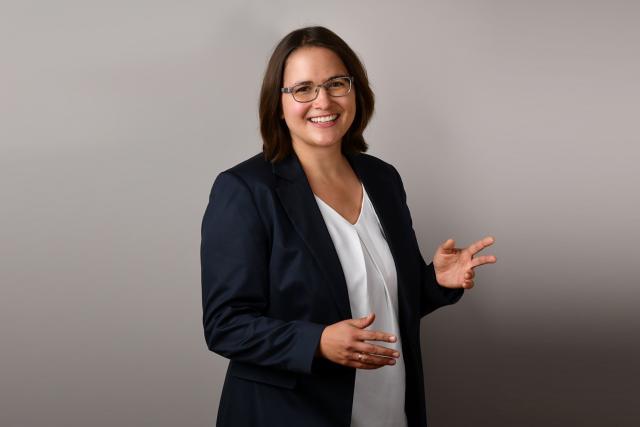
© RPTU, Karin Hiller
Prof. Dr.
Selma
Rudert
Professor for Social Psychology and Society
"People need other people. I am intrigued by the question of how human social interaction works and how it can be improved."
Selma Rudert is Professor for Social Psychology and Society at RPTU Kaiserslautern–Landau. She studied psychology in Mannheim and received her PhD from the University of Basel. She currently leads a DFG-funded Emmy Noether Research Group on motivated ostracism decisions. Her research focuses on group dynamics, especially social ostracism, norms, moral judgment, and migration and has been published in top international journals in social psychology.
researcher profile on rptu.de
CURIOUS? YOU CAN LEARN MORE ABOUT THIS TOPIC HERE:
Rudert, S. C., Damp, L. C., Kenntemich, C., Möring, J. N. R., & Büttner, C. M. (2026). Beyond the target: Source motivation and observer attributions in ostracism research. The Journal of Social Psychology, 166(1), 13–25.
Rudert, S.C. (2024). Soziale Ausgrenzung: Konsequenzen, Motive und Attributionen. Psychologische Rundschau, 75(3), 203–215.
Rudert, S. C., Greifender, R., & Williams, K. D. (2019). Current Directions in Ostracism, Social Exclusion and Rejection Research. Routledge.
Rudert, S. C., Möring, J. N. R., Kenntemich, C., & Büttner, C. M. (2023). When and why we ostracize others: Motivated social exclusion in group contexts. Journal of Personality and Social Psychology, 125(4), 803-826.
Rudert, S. C., Janke, S., & Greifeneder, R. (2020). The experience of ostracism over the adult life span. Developmental Psychology, 56(10), 1999-2012.
Rudert, S. C., Sutter, D., Corrodi, C., & Greifeneder, R. (2018). Who’s to blame? Dissimilarity as a cue in moral judgments of observed ostracism episodes. Journal of Personality and Social Psychology, 115(2), 31-53.
ZDF Terra Xplore mit Eric Mayer: Hast du dein Leben unter Kontrolle? So kommst du gegen Gruppenzwang und Mobbing an.
DER SPIEGEL vom 19.06.2025: "Ausgrenzung wird unterschätzt. Dabei ist sie allgegenwärtig".
Deutschlandfunk Kultur: "Forschung zu Mobbing: Warum bestimmte Menschen ausgegrenzt werden".
sueddeutsche.de: "Schweigen ist Gift"
stern.de: "Hilfe, ich gehör nicht dazu! Warum sich Ausgrenzung so schlimm anfühlt."
Psychology Today: "Exclusion, Rejection, and Assigning Blame"