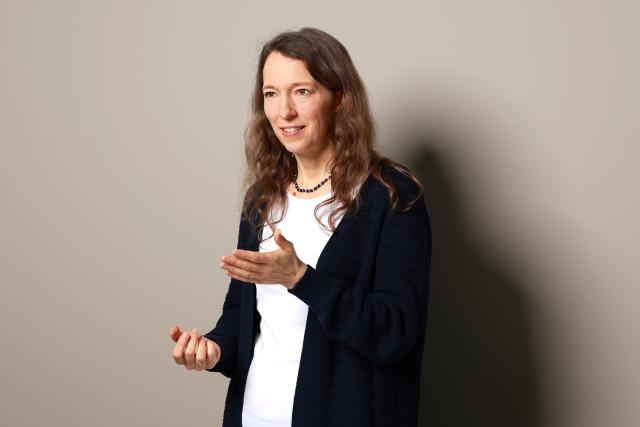
Claudia Redenbach reveals the inner workings of objects. Using mathematics and statistics, she analyzes the finest structures – cracks in concrete, wood fibers in insulation materials, and pores in ice.
Thanks to modern imaging technology, almost anything can be X-rayed today – even concrete components in their original size in the RPTU's large-scale computer tomograph “Gulliver.” But evaluating high-resolution images is a science in itself: Claudia Redenbach develops statistical models to reliably identify structures in materials.
Concrete, wood, blood vessels, polar ice: at first glance, these things have little in common. Not so for Claudia Redenbach: she is interested in the geometric structure of various things. From her perspective, it reveals patterns that are often similar and can be described using comparable methods – it's all a question of mathematics.
The finest structures become visible
“In principle, we can measure and characterize anything that can be imaged with sufficient quality,” explains the statistics professor. This includes cracks in concrete as well as cellulose fibers in insulation materials, pore spaces in foams, air bubbles in ice, cells in biological tissue, and even particles distributed throughout space. “We look at how these objects are aligned, how thick or large they are, and how strongly they are interconnected. Our task is to describe these properties mathematically and reproduce them using models.” To this end, her team develops statistical methods and algorithms. “We don't just want to observe this with the naked eye, we want to quantify it – in other words, make it measurable,” says Redenbach.
Tracking cracks in concrete
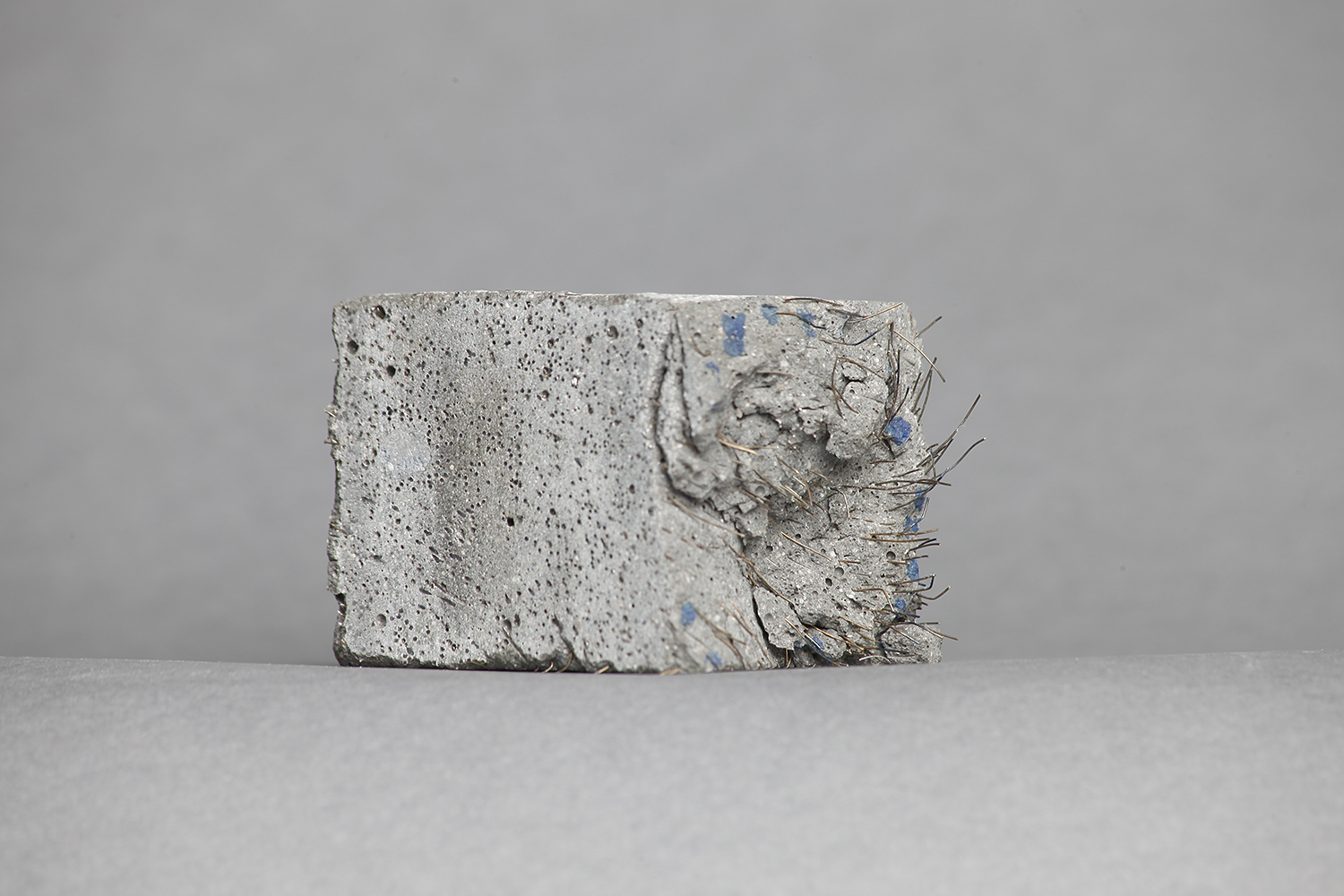
This expertise is needed, for example, by civil engineers who use the globally unique large-scale computer tomograph “Gulliver” in Kaiserslautern to scan entire concrete beams. The huge machine puts components under controlled pressure and delivers 3D images so detailed that even cracks measuring a tenth of a millimeter can be detected. Redenbach's working group ensures that such images can be evaluated and anomalies identified.
“When I have a CT image of a concrete block, the first things I need to know are: Where is the crack? How thick is it? Which pixels represent fibers and where are the pores?” Claudia Redenbach
It is only once such structures have been identified and distinguished from each other in the image that changes can be measured. For example, how much a crack branches out and how it grows under increasing load.
Methods for different scenarios
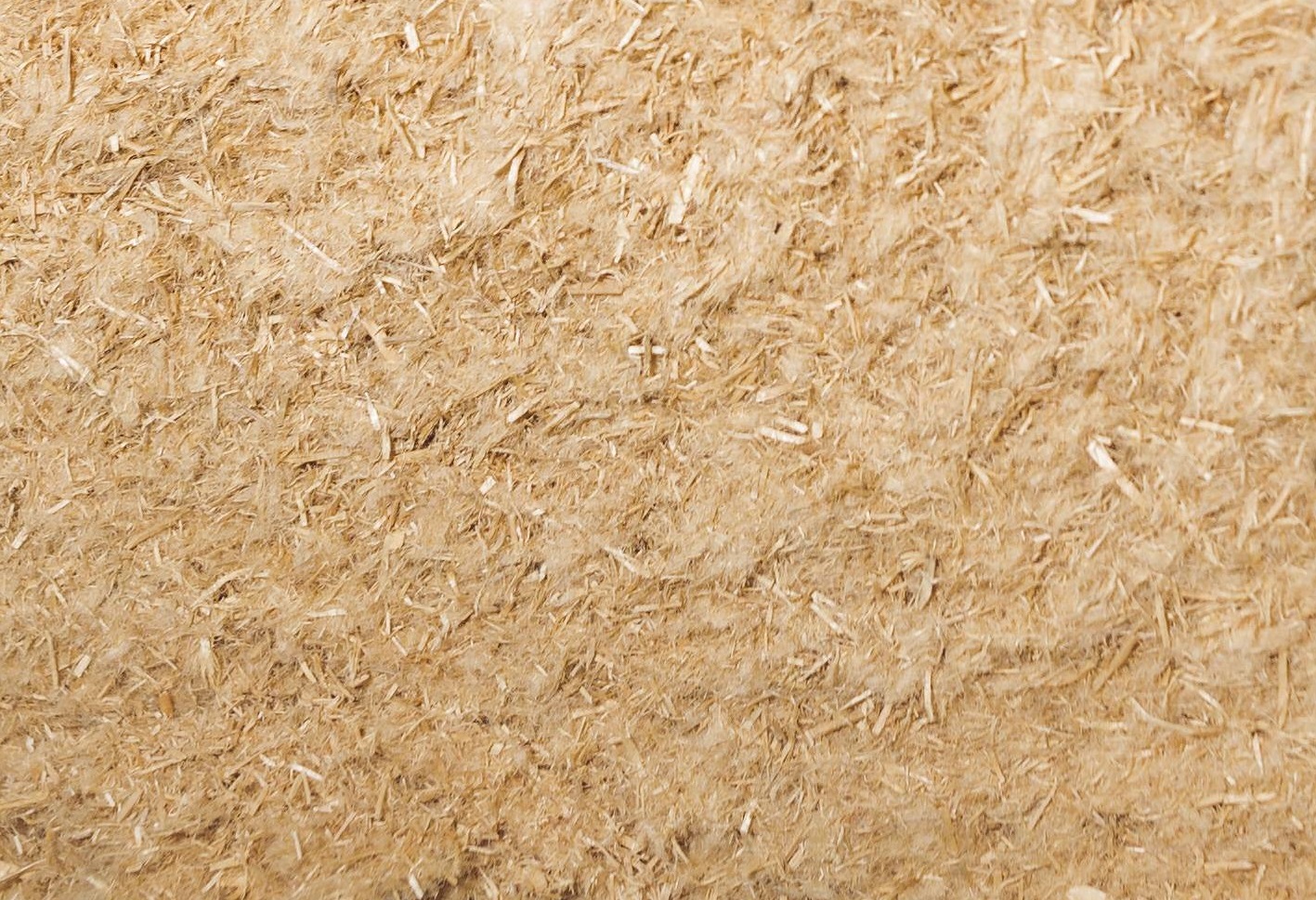
Large-scale CT is just one of many fields of application. The researchers can apply their methods to a wide variety of scenarios. For the “Oho” (Optimization of Wood-Based Insulation Materials) project, in which several research and industry partners are collaborating, Redenbach's team is examining tomographic images of insulation boards. The mathematical descriptions of how the fibers are structured, aligned, and distributed – homogeneously or irregularly – provide manufacturers with a basis for improving the insulating properties.
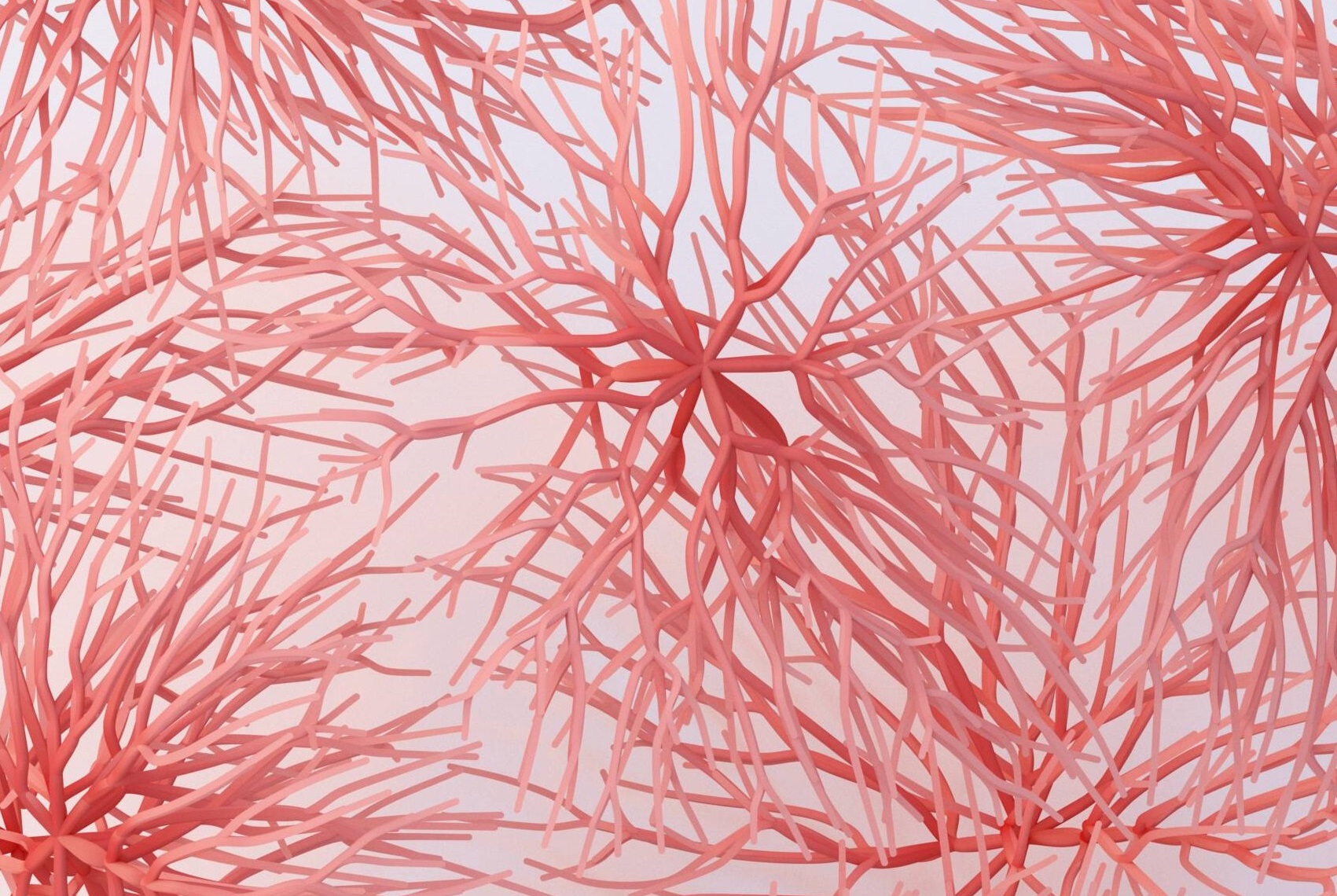
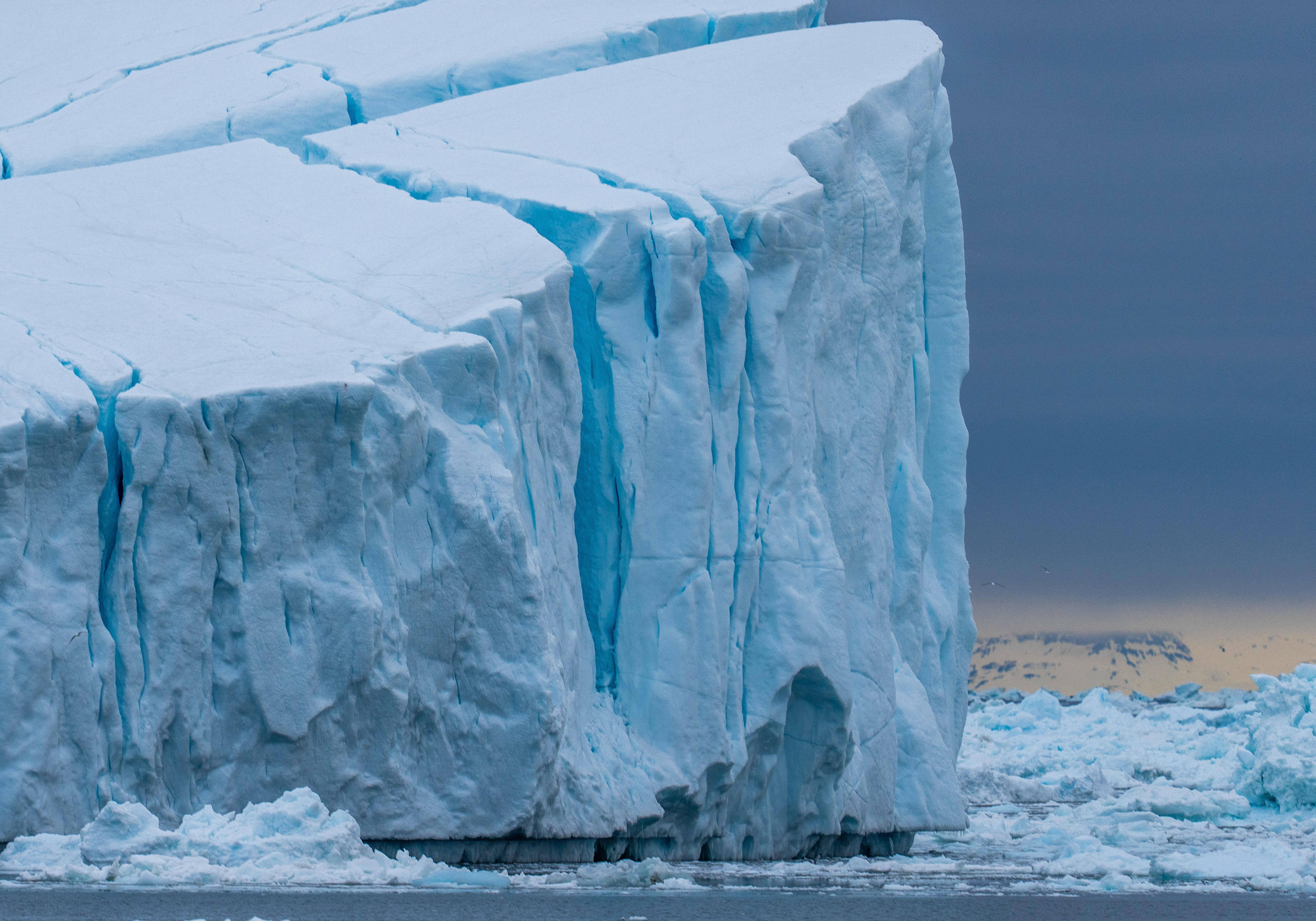
Wood-fibre insulation, blood vessels, polar ice: Claudia Redenbach studies intricate structures to reveal the insights they contain.
Mathematics “revisited”
Ancient ice was the subject of a research project with the Alfred Wegener Institute in Bremerhaven. There, ice cores from the polar regions are being examined. "The ice has been compressed over the centuries. The glaciologists wanted to know how large the compression factor is: if one meter of snow falls today, how small will it be in a hundred years?“, reports Redenbach. Their approach: ”Air pores are trapped in the ice. When it is compressed, these pores change their position relative to each other. Using spatial statistics methods, it is possible to deduce how strongly the snow has been compressed."
To find this out, however, Redenbach's team first had to develop the necessary mathematical methods. “The literature only offered isolated approaches that were used for two-dimensional structures. We generalized the methods to 3D, added new components, and used them to analyze the arrangement of the air bubbles. Our results then actually corresponded very well with the glaciologists' expectations.”
Blood vessels and road networks
The methods developed by mathematicians are also used in basic medical research. For example, they are used to analyze high-resolution images of blood vessels taken in a synchrotron, a special particle accelerator that generates particularly intense X-ray light. The task is basically similar to that for technical materials: the aim is to make structures visible in the image, segment them, and describe them precisely in order to provide insights – in this case for medical purposes.
“One of our master's students is even investigating urban road networks,” says Redenbach, outlining the breadth of her research. “Mathematically speaking, this also involves lines that interconnect and form patterns.”
In addition to analyzing real structures, Redenbach and her team develop stochastic models. These can be used to simulate virtual samples in which the research team changes parameters such as fiber content, thickness, or alignment to investigate how these changes affect properties such as strength or heat conduction.
It won't work without the human mind
What particularly fascinates Redenbach: “We look for the mathematics in structures that are presented to us as images and transfer concrete applications into the mathematical world by asking: Which model should I use? Which parameters do I need to consider? That's just exciting!”
Artificial intelligence is also increasingly being used in her field of research, for example in the form of neural networks for image processing. However, mathematicians do not believe in blind trust in AI. "Like all models, AI models are subject to certain limitations, for example in the form of the training data used. Popular image generators can easily create images of children in the park, cars on the street, or dogs in the forest. However, they fail spectacularly when it comes to generating CT images of concrete, for example. Simply because such images hardly ever appear in their training data.“
Models are always simplifications. That's why it's all the more important to know where their limits lie and to select the right model for the task at hand. ”Reality is too complicated to be fully represented in a model. The art of modeling lies in consciously deciding what to leave out and what must be taken into account.
"I find it fascinating that structures from very different fields of application can often be described in very similar mathematical terms."
Claudia Redenbach has headed the Statistics Working Group at the Department of Mathematics at RPTU University Kaiserslautern-Landau since 2017. The group develops models and methods of statistical image analysis, stochastic geometry, and spatial statistics for analyzing and modeling the microstructure of materials. Examples include foams, fiber composites, concrete, and porous filter media, but also natural "materials" such as polar ice or biological tissue.
Christoph Karcher isa freelance journalist and communicator with a penchant for things that deserve a second look in order to tease out the interesting things in them. He studied political science and cultural studies, specialising in media, and writes about research and technology topics. He has the ambition to explain even the unwieldy without minimising it.
Today a parking garage, tomorrow offices, the day after tomorrow apartments. Jürgen Graf develops durable wood structures that can be reinvented again ...
A giant CT scanner in Kaiserslautern reveals damage and weaknesses in structural components. This massive, one-of-a-kind system is unique worldwide ...
They don’t take center stage, but they keep the world moving: bearings are technical components without which no car could drive and no wind turbine ...